Showing posts with label Reading/Writing Resources. Show all posts

Thursday, December 6, 2012

Writing with Focus

Have you ever noticed that sometimes your brain is so full of ideas, that once you sit down to put them on paper they come flooding out and the focus becomes muddy? For a lot of students (especially mine), the answer to that question is a big, fat, Y-E-S! Through the years, I have noticed that my students have great ideas, but difficulty sticking to those ideas in their writing. Or, they try to write too big, and the interesting fall by the wayside in an effort to get down the events that happened on a particular day. That's why I had to share the awesome writing project we did earlier this year. I would LOVE to take all of the credit for this one, but I actually got this idea from a coworker who had been struggling with the same issue with her students. 

We wanted our kids to be able to pick an interesting topic, but then narrow the focus of their writing so that they could add great details and be more descriptive. Often times, when students pick a topic that they have a lot to say about, the writing becomes too general and jumps around. We wanted the students to "linger" in a specific moment in time with their audience. To do that, they had to focus their writing from broad to specific. To help my students understand this idea, we first viewed the book Zoom by Istvan Banyai. The students and I discussed that the more we "zoomed in" on each picture, the more details we were able to discover. I then related this to a microscope. As you zoom in on a microscope, you obtain more information about your subject than you would have gleaned by simply using your eyes. This visual reminder helped immensely as the students began their writing projects.


 Image courtesy of http://msmcclure.com/?page_id=6313
We started by picking events that we remembered very clearly. But, instead of writing about the entire experience, we "focused in" on a moment. It was challenging for the kids to not write about an entire trip or an entire day, but with some help they got there. I gave them a graphic organizer (see right) that was an upside-down triangle. I modeled the process of narrowing our writing focus with my own trip to the zoo during summer vacation. Rather than write generally about the whole day, I decided to write about watching the new baby gorilla playing in the pool of her enclosure. The narrowing of my topic went like this: Summer Vacation> Trip to Washington, D.C.> Zoo> Gorilla Enclosure> Watching the baby play in the pool.


Rather than have the students take off and start writing, we spent time developing good leads and then choosing the most interesting one. We discussed how to incorporate sensory language into our writing to help the reader feel as though they, too, we a part of our experience. We ended with how to write a conclusion, or "wrap," that tied back to our lead and brought our writing to a satisfying end. Below are some pictures of our final writing display, as well as examples of student work. 


I hope you find this post helpful and try it out with your students. Have you done any interesting writing projects this year?


Sunday, December 2, 2012

Life's Been Great in 228!

If I could sum up the school year so far in one word, it would be...

BUSY!

This year I have committed to teaching reading and writing workshop and not using our county anthology. I am so fortunate to be able to have the freedom to make this decision, as I truly believe it is what is best for students. However, it is new territory for me (and many of my colleagues), so I have been up to my eyeballs in work. I know that many say reading and writing workshop seems like it would be easier to plan, but if you are doing it correctly it's really a lot more challenging (in my humble opinion). Although there are not as many worksheets/dittos/busy work, planning is based on the needs of the students and therefore requires frequent assessment and careful analysis of student work. So, not only am I grading my students' work but I am also frequently taking notes on it and comparing it to previous work. Despite the heavier workload for myself, I do love it. And the best part is...so do they.

So, what exactly have we been up to? Keep on reading to find out!

One thing I did differently this year is change how I use my response journals. The way they are set up is the same (click here to see blog post about setup), but instead of the students writing about their independent reading, they write me letters about our read aloud. This year, I found a great idea on Pinterest to help me model how a well-written letter should look. As a class, we read The Junkyard Wonders by Patricia Polacco. (This was a great lead into R.J. Palacio's Wonder, by the way!) I wrote a letter to the students on chart paper, and then together we identified the components of the letter and discussed the expectations. This letter now hangs in the classroom as an example that they can refer to throughout the year.

I also gave the students "Thinking Stems" that I found in a blog post by Nancy at Teaching My Friends.   to help them discuss their thoughts about our reading. These are glued onto the very first two sheets of their notebooks. In addition, the students take notes in the back half of their notebooks that they then refer to as they write their letters. Not only is the note taking helpful to their writing, but they also use their notes to drive discussion about what we have read.

Character Study Anchor Chart
During the first part of the year, the students and I have been focusing on characters in our reading. I have taught many minilessons about the complexities of characters, beyond just character traits, feelings, and relationships. We have kept an anchor chart about all of the thinking we have done about characters so that the students may refer to it during their reading workshop time. It has been so amazing to hear their conversation about characters and see their thinking deepen in their work. I am so proud of how far they have come! The best part is now they are making tons of text-to-text connections because they have been studying their characters so closely across texts. 


Our growing list of character trait words!
A favorite activity of mine that we did was coming up with more precise language to describe characters. For this lesson, I started out by discussing the common words I see students use when discussing character traits (e.g. mean, nice, caring, kind, etc.) Then, I gave them new words and in groups they came up with synonyms, examples of character actions that would fit with each trait, and names of characters from books we have read that fit each trait. Then, as a class we grouped each trait into one of three categories: Positive Connotation, Negative Connotation, or Neutral. Now my students have access to words that are much more meaningful when they write and discuss their thinking about characters. And, as we come across new "precise language" about character, we add to our list!


 What has been going well in your classrooms so far this year? I would love to hear from you!

Saturday, October 6, 2012

#WONDERschools Blog Tour


Have you heard of it? Better yet, have you read it? Do you know the wonder that is Wonder by R.J. Palacio?

Wonder is one of 2012's hottest novels by first-time author R.J. Palacio. Teachers, students, librarians, and kid's lit lovers alike are singing the praises of this WONDERful book. Don't believe me? Try following some of the many hashtags that have popped up all over Twitter (# WonderofWONDER, #WONDERschools, to name a few) and you will find hundreds of people chatting about this powerful book.

I first read Wonder as an Advanced Reader's Copy that I obtained form NetGalley. I was hooked. I read it in two days, barely able to pull myself away from the computer screen on which I was reading it. As soon as I read the last sentence on the last page, I knew that this book HAD to be shared with as many children as I could reach. It was the last novel I read to both of my reading and language arts classes last year. It was the perfect way to end the year before I sent them out into the world beyond elementary school. We made wonderful memories as we discussed the book using a mixture of the questions my students came up with, some of my own, and the ones provided on R.J. Palacio's website. We wrote about it. We cried over it. We loved it.


(**Spoiler Alert** Below is the "flipchart" I used with my students. Some of the questions reveal key events in the story and may spoil it for you if you haven't read it yet...which you need to!)
Wonder Questions


This year, I decided to read Wonder with my kids at the beginning of the year. My hope was that it would help build up our classroom community. I decided that by reading it at the beginning of the year, the impact would not only carry into their lives outside of school, but inside as well. Typically I allow my students to vote for their read aloud, but this year I decided this one was too important to potentially pass up.

Every day my students eagerly enter the classroom after specials, grab their response journals, and form a circle on the carpet. I decided to sit with my students on the floor, not above them on my "teacher chair," this year. I can see them, hear them, and look at what they are writing/sketching in their notebooks. We reserved the back half of the students' journals for notes. After previewing Wonder (using the front and back covers, inside flap, and first chapter), the kids thought about what they wanted to focus on as we read. Some chose how the song quotes connected to each character's part, others were interested in tracking how August (the main character) dealt with being in school for the first time. The students then designed their own note-taking sheets, which they use and refer to when writing letters to me about our read aloud. I have been so amazed at my students' honesty and empathy as I read their entries.

I love sharing this book with my students. It brings us together as a community and helps them understand the effect their actions, both good and bad, can have on others. They see connections between the characters we are reading about, and characters in their independent reading. Wonder is a great tool for teaching empathy, but it is also great literature. I use it to model skills and strategies I want my students to use in their own reading and writing. I am so grateful to R.j. Palacio for giving me such an invaluable resource to use in my classroom. I know Auggie will stay with all of us forever.


Saturday, September 22, 2012

What a Year So Far!

Hi followers! It's been a long time! This school year is off to a great start so far...but it has been busy busy busy! I am currently in the throws of a full fledged reading and writing workshop. I have been doing a lot of reading and research to help guide me, but I am still trying to figure out so much. 

I am enjoying tailoring my teaching to my students' needs based on what I am seeing in their work, and I have found that this new model for teaching is giving me a lot more time for conferring with students. In the past four weeks, I have gotten to know my students' strengths and weaknesses and am already planning on how to better meet their needs through small groups and one-on-one teaching. 

The best part is that I have the full support of my principal, who is very excited about me trying out this new teaching style. I am the first person in my school to completely abandon the anthology. It's sort of scary to not have the assurance of a pre-planned curriculum, but I feel like I have found a lot of support via Twitter. 

Last school year, I implemented some pieces of the reading and writing workshop and saw so much growth in my students. I can only imagine what I will see by the end of this school year. For those of you who are interested in looking into the reading and writing workshop, here are some resources I have found the most helpful:

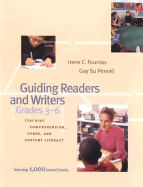
Guiding Readers and Writers by Fountas and Pinnell has a ton of information about implementing the reading and writing workshop. The book includes mini-lessons to help guide beginners in launching the workshop, along with images of anchor charts that I have found very helpful.


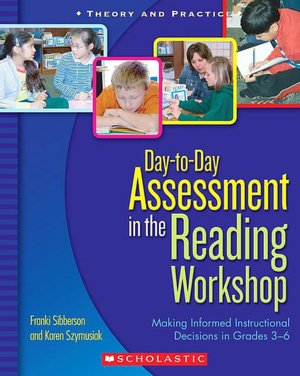
Day-to-Day Assessment in the Reading Workshop by Franki Sibberson helped ease many of my fears when deciding to venture into the world of reading and writing workshop. Franki explains how to use student work, class discussions, and conferences to drive instruction. Reading this book helped me see all the different methods I could use to assess my students and gather data. There are student work samples and forms to help get you started, too!


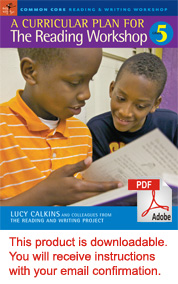
I also downloaded a digital book by Lucy Calkins called A Curricular Plan for the Reading Workshop from the Heinemann website. This is a great tool to help provide a scope and sequence for the year. One of the most intimidating factors for making the switch to reading workshop was not knowing what units to teach and how to teach them. Let's face it, that's what makes anthologies so convenient. They tell you what stories to teach, and what skills to teach with them. This book Gives you a month by month sequence you can use to plan instruction. Calkins also provides teaching points to cover within each unit of study. There are not any actual "lesson plans," but I like that. It is up to me to figure out what is best for my students, but I like having a resource that will help provide some structure. Heinemann also has the same type of resource for writing workshop, and both resources can be found for any grade level. 

Well, that's all for now. I am still fine tuning and researching. This is going to be quite a big year for me, but I am feeling very excited and energized about this new adventure. I can't wait to see my students grow and thrive in an environment that is catered to each of their individual needs. 

Who else is using this structure for teaching language arts? What are some of your favorite resources that you use? I can't wait to hear from you all!


Saturday, July 21, 2012

PinAnon

Hello. My name is Mrs. P and I am...a Pinterest addict.

*phew* I am glad that is off my chest! I have a feeling there are a lot more like me out there, though! Am I right?!?

This summer, I have spent a ridiculous amount of time pinning everything from hair and makeup tips that will hopefully speed up my morning routine, to bento box ideas for lunches (because who doesn't want a more enjoyable lunch?!?). Along with the insane amount of uselessful home and lifestyle ideas I have pinned, I have gone absolutely bonkers with school ideas. These range from decor inspiration to actual lessons and teaching methods I want to try out.

And while I have come across a TON of wonderful ideas, I am at the point of feeling extremely overwhelmed! How on EARTH am I going to implement all of these fantastic ideas in one school year without pulling my hair out (and thus, defeating the purpose of the hair care pins)??? If you are anything like me, you have probably come to the realization that it's just not possible. And, if we are really kindred spirits, your feeling a little bit anxious about it.

But don't fret, where there is a will there is a way!

Here is my plan: I am going to pick five ideas (out of the 300 plus I have pinned) to focus on. If they go smoothly, I may add more. Now the tricky part is narrowing all of those ideas down to five...

You all will be the FIRST ones to know when I make my choices, so stay tuned!

Now your turn:

Tell me at least one idea you have found (on Pinterest or elsewhere) that you will definitely be trying out in your classroom this year. Please provide the link if possible...just in case we would like to pin it.

;)

P.S. I just HAD to share this yummy dinner I made with you (recipe courtesy of...you guessed it...PINTEREST!) It was so easy and SO delicious! Click here to hop over to the blog that it was originally pinned from to try it out for yourself!


Stuffed Spaghetti Squash...very low carb and VERY yummy!


Tuesday, May 29, 2012

Guest Blog Post from David Etkin

I am SUPER excited about today's post. My new Twitter buddy, David Etkin (@davidaetkin), generously agreed to share a post about Reading Partnerships and Clubs once I hit 100 followers.

This is a fantastic idea for making reading in the classroom feel more authentic, as well as making it much more motivating for students than your traditional whole-class novel set up. Thank you, David, for sharing this WONDERful idea and inspiring me to break out of the box and try new things in my own classroom. This is definitely something I will be implementing in the 2012-2013 school year!


The Case for Reading Partnerships and Clubs

Forming reading partnerships and book clubs with young students is challenging. How do I partner the students—By interest? Reading level? Friend requests? And once they are in these groups, how do I help them to set reasonable goals? How can I keep their conversations moving forward? What do I do about the student who doesn’t do his reading?

Surely, there are many questions. But I’m persevering in my book clubs plan because this I believe: Some of the most powerful reading we do is partner reading.


(These pictures are the students reading on the first day after they choose their books. After this first day, reading and preparation is done independently.)


I read for myself all the time. Oftentimes my reading is to find that next great book I can recommend to a student at just the right time. (And with the Nerdy Book Club, there are so many options.) But the books that are most memorable to me are the books I’ve had the opportunity to discuss.

My colleague, Brent Peterson, and I read Dead End in Norvelt in partnership. We kept a simple goal of about 100 pages a week (we were doing other reading, of course) and got together during a free period to discuss. These were awesome discussions.  [You can follow these links to see our conversations… if you’re really interested. Talk 1. Talk 2. Talk 3.] We came prepared with some Post-it notes and lists of things we wanted to talk about and off we went. The half hour was barely enough time. It was great how we each brought different ideas and insights to the conversation. Brent saw things that I never would have on my own. Discussing a book brought it to life and made it more interesting than it would have been had either of us read it independently.

Norvelt conversation #3


(Who else would have laughed with me about paraffin wax hands and deterring deer with bodily functions?)  I think these conversations are why, though the public response to Norvelt has been lukewarm, Brent and I liked it so much. You can get more of a summary of our conversation on our Nerdy Book Club Blog post.

Brent and I also read and discussed Wonder a lot. And then we started passing it along to others to read. My mom read it. Then my dad. Then my sister. Then her book club. Then other reading teachers at my school. Students and their parents. And we read it aloud to our students. (And finally my wife is reading it.) And it was like Wonder became part of the social fabric of my life. It was something I could talk about with anyone around me. Family dinners were filled with conversation of Auggie and Daisy and Via. Being able to then talk with the Maker of these characters and this WONDERworld was awesome.


And this---THIS---is why I want to persist in pushing my students into partnerships and clubs. As I’ve told them, book clubs are social opportunities wrapped around a book. (Hmmm… good pearl analogy there.) I want my students to experience the joy of a book coming to life. Of understanding a book better together because they talked about and cleared up confusions and saw things from different points of view. I want my students to know the richness of literature.


So I’m willing to spend an afternoon with the book partnership/club letters they’ve written to me (Name; why I would be a good partner to someone else; my approximate reading level [GRL]; five classmates who would be good partners for me and why) spread out all over the living room floor or dining room table. (“Dad, what are you doing?”)

I’m willing to deal with a slacker reader/partner who doesn’t come prepared with the reading complete or Post-it notes ready to discuss. Because I see so many other students benefiting from rich conversations and thought building that they wouldn’t have if they only read independently.

I’m looking forward to next year and getting these partnerships and clubs underway earlier in the year. We are already discussing how to scaffold them—giving students smaller texts with which to practice before diving into a novel. I can’t wait to see my students blossom in their book discussions.

We have a great year of book conversations behind us, a better one ahead—and the state of Book Clubs is Strong.

Your turn:

Have you experienced reading as part of a partnership or club? How did it add to your reading experience?


{resources}
Planning bookmark for clubs:


  Evaluation form:


Thanks again to David for his great post. Maybe if we leave him lots of comments, he'll do it again for my blogiversary! *crosses fingers* Be sure to check out David's blog, Words Read & Words Written,  for more great posts like this one!

Saturday, May 12, 2012

Happy Bloggy Birthday, Jen and Kellee!


I am so excited to be a part of Jen and Kellee's blog birthday celebration! Teach Mentor Texts is a great blog for sharing books for both personal enjoyment and classroom use. I got to know both Jen and Kellee through Twitter (and if you don't already follow them, you should!). We have had lots of great "chats" about great books and reading/writing workshop. So, when I was invited to help them celebrate their blog's second birthday, I readily accepted the invitation!


My book choice is actually a newer book that I have found a lot of uses for this year. That book is (my new favorite!) The One and Only Ivan by Katherine Applegate. If you have been on Twitter since the book was released, you know if has been getting a lot of love from teachers and students across the country. I used it as a read aloud in my class, but also to teach various skills in both reading and writing. 


First of all, this book totally hooked my kids. They loved the idea that it would be a quick read (there is a great deal of white space on the pages since it is a novel written verse). Also, the main characters are animals, which meant that almost every child could connect to the book. Finally, the language Katherine Applegate uses to tell Ivan's story is simply beautiful. She creates pictures with her words that are so vivid and detailed. That being said, it was a great book to revisit the important strategy of visualizing. My students were allowed to doodle what they pictured in their minds as they read. One student then took it a step further and added colors to her picture of Ivan's "domain. 

We also spent a lot of time talking about figurative language like similes and metaphors. This was a great way to discuss how interpret such language (we paraphrased the author's meaning into our own words), as well as how to use it in our own writing (we referred back to Ivan as we worked on poems in our poetry unit). 

Another great use for this book is discussing static and dynamic characters as there are examples of both in the story. This lead us to also discuss types on conflict (man vs. man, man vs. self, man vs. nature, etc.). Further more, we spent time identifying how the author shifted from the present to the past and the importance of using the past to help explain the story. Lots of great opportunities for digging deeper into story structure (beyond your basic characters, stetting, plot, blah blah blah...)

We also spent some time talking about author's viewpoint (or opinion). It is not difficult to figure out how Katherine Applegate feels about animals held in captivity, or how she feels about humans who mistreat animals. She uses her characters words and actions to make that clear. The students did such a great job pinpointing character words, actions, and story events that were examples of the author expressing her feelings without directly stating them to the reader. A lot of them began emulating this in their own opinion pieces about whether or not bubblegum should be allowed in school. 

What I found most fascinating was how the students were able to write about the story and recall information without even having the text directly in front of them. This was a great way for the students to practice summarizing and paraphrasing without them even knowing it! It also helped improve their listening comprehension.  There were just TONS of different mini lessons that were easily tied into this wonderful story. 


There are not words to describe how much I enjoyed Ivan, but I loved it even more after sharing it with my students and seeing them gain so much from it. We had rich discussions about human nature, society, animal rights, and character traits. I know this is a story that will stay with my students as they often refer back to it. In response journals about independent reading, I often come across sentences such as "This reminds of when ____ happened in The One and Only Ivan", or "I think ______ is a lot like Stella because..." It is fantastic to see the students hold on to a book and carry it with them long after our work with it is done. 


If you have not already shared this wonderful book with your students, I hope you decide to. I am more than happy to add some ideas for more uses in both reading and writing as I am STILL thinking of some that I would like to add in next year.

Monday, April 2, 2012

It's Monday! What are you Reading? 4/2/12

It's Monday! What are you Reading? From Picture books to YA is a meme hosted by Jen and Kellee at TeachMentorTexts. Hop on over to their blog to see what others are reading this week!  


This week I read:


The Bad Beginning (A Series of Unfortunate Events, #1)

The Boy Who Harnessed the Wind: Creating Currents of Electricity and Hope

The Trouble with May Amelia

Dead End in Norvelt

I really enjoyed all of these books. I don't know what took me so long to read The Bad Beginning, but now that I have I am looking forward to reading the next book in the series. I listened to this book on CD and it was narrated by Tim Curry. He did a FANTASTIC job! I think kids would love the voices he gives to each character, especially his very creepy interpretation of Count Olaf. I read The Boy Who Harnessed the Wind on WeGiveBooks.org. It was a very inspirational story based on real events. Dead End in Norvelt was narrated by the author, Jack Gantos. This was great because he has a very funny voice and I enjoyed listening to him imitating his more youthful self. The Touble with May Amelia was very good, and I can't wait to get my hands on the original! (To see book trailers for the last two books, click here.)

This week I  will still be working on Breadcrumbs by Anne Ursu. I am also going to be starting Divergent by Veronica Roth. A could of friends and I decided to start a mini book club, and this will be our first read. Since reading the Hunger Games series, I am totally into this type of genre now and can't wait to start another highly recommended series. 

What have you been reading lately?


Monday, March 26, 2012

It's Monday! What are you Reading? 3/26/12

It's Monday! What are you Reading? From Picture books to YA is a meme hosted by Jen and Kellee at TeachMentorTexts. Hop on over to their blog to see what others are reading this week!  


Here are the books I read this week:


Here are the books I am working on:


I am reading Breadcrumbs by Anne Ursu, and listening to the audiobook of The Touble with May Amelia by Jennifer L. Holm. This is Holm's follow up novel to Our Only May Amelia, which I have not yet read. However, from what I can tell, you do not necessarily need to read one before the other. Breadcrumbs would make and excellent read aloud from what I can tell. A mixture of realistic fiction and fantasy.

Both books that I am currently reading are very good so far, but I will tell you more about them when I finish!

What reading adventures did you take this past week, and which ones will you venture into next?


Photobucket

Friday, March 23, 2012

New Discovery: Pic Lit!

This week, my kids used a really cool site I discovered (thanks to Twitter)! The site is called Pic Lit. There, you can search a wide variety of inspirational photos and create sentences (or paragraphs) that appear right on top of the photos. What I really like is there are two ways of doing this:

1) A drag and drop with provided words for those writers who need some inspiration


OR


2) A freestyle for writing virtually anything


Since this was the first time my kids had used the site, I just had them write what came to their minds when they say the picture. Here are some of the results:


I told them not to worry about spelling or capitalization this time, so excuse our errors. I just wanted them to be inspired. As I have thought more about this site, I feel like there are TONS of possible uses in the classroom. Some of these include:

  • writing a full poem with the picture as a background
  • collecting favorite book quotes and writing them into pictures that match
  • writing sentences using sensory and figurative language
  • writing sentences about "life" and life lessons
  • writing themes of books

I needed to create a log in, and then I used our class name as the "Pen Name." When the kids log in, they log in as me, but they are all able to log on simultaneously. There isn't a print feature, so you can have them email you the pictures and then copy and paste the images into word if you want to print them. I use a program called MSWSnap to take pictures of them from the site and then save them. Do what works best for you. 

How do you think you might use Pic Lit in your classroom?