Showing posts with label teaching resources. Show all posts

Sunday, December 2, 2012

Life's Been Great in 228!

If I could sum up the school year so far in one word, it would be...

BUSY!

This year I have committed to teaching reading and writing workshop and not using our county anthology. I am so fortunate to be able to have the freedom to make this decision, as I truly believe it is what is best for students. However, it is new territory for me (and many of my colleagues), so I have been up to my eyeballs in work. I know that many say reading and writing workshop seems like it would be easier to plan, but if you are doing it correctly it's really a lot more challenging (in my humble opinion). Although there are not as many worksheets/dittos/busy work, planning is based on the needs of the students and therefore requires frequent assessment and careful analysis of student work. So, not only am I grading my students' work but I am also frequently taking notes on it and comparing it to previous work. Despite the heavier workload for myself, I do love it. And the best part is...so do they.

So, what exactly have we been up to? Keep on reading to find out!

One thing I did differently this year is change how I use my response journals. The way they are set up is the same (click here to see blog post about setup), but instead of the students writing about their independent reading, they write me letters about our read aloud. This year, I found a great idea on Pinterest to help me model how a well-written letter should look. As a class, we read The Junkyard Wonders by Patricia Polacco. (This was a great lead into R.J. Palacio's Wonder, by the way!) I wrote a letter to the students on chart paper, and then together we identified the components of the letter and discussed the expectations. This letter now hangs in the classroom as an example that they can refer to throughout the year.

I also gave the students "Thinking Stems" that I found in a blog post by Nancy at Teaching My Friends.   to help them discuss their thoughts about our reading. These are glued onto the very first two sheets of their notebooks. In addition, the students take notes in the back half of their notebooks that they then refer to as they write their letters. Not only is the note taking helpful to their writing, but they also use their notes to drive discussion about what we have read.

Character Study Anchor Chart
During the first part of the year, the students and I have been focusing on characters in our reading. I have taught many minilessons about the complexities of characters, beyond just character traits, feelings, and relationships. We have kept an anchor chart about all of the thinking we have done about characters so that the students may refer to it during their reading workshop time. It has been so amazing to hear their conversation about characters and see their thinking deepen in their work. I am so proud of how far they have come! The best part is now they are making tons of text-to-text connections because they have been studying their characters so closely across texts. 


Our growing list of character trait words!
A favorite activity of mine that we did was coming up with more precise language to describe characters. For this lesson, I started out by discussing the common words I see students use when discussing character traits (e.g. mean, nice, caring, kind, etc.) Then, I gave them new words and in groups they came up with synonyms, examples of character actions that would fit with each trait, and names of characters from books we have read that fit each trait. Then, as a class we grouped each trait into one of three categories: Positive Connotation, Negative Connotation, or Neutral. Now my students have access to words that are much more meaningful when they write and discuss their thinking about characters. And, as we come across new "precise language" about character, we add to our list!


 What has been going well in your classrooms so far this year? I would love to hear from you!

Saturday, September 22, 2012

What a Year So Far!

Hi followers! It's been a long time! This school year is off to a great start so far...but it has been busy busy busy! I am currently in the throws of a full fledged reading and writing workshop. I have been doing a lot of reading and research to help guide me, but I am still trying to figure out so much. 

I am enjoying tailoring my teaching to my students' needs based on what I am seeing in their work, and I have found that this new model for teaching is giving me a lot more time for conferring with students. In the past four weeks, I have gotten to know my students' strengths and weaknesses and am already planning on how to better meet their needs through small groups and one-on-one teaching. 

The best part is that I have the full support of my principal, who is very excited about me trying out this new teaching style. I am the first person in my school to completely abandon the anthology. It's sort of scary to not have the assurance of a pre-planned curriculum, but I feel like I have found a lot of support via Twitter. 

Last school year, I implemented some pieces of the reading and writing workshop and saw so much growth in my students. I can only imagine what I will see by the end of this school year. For those of you who are interested in looking into the reading and writing workshop, here are some resources I have found the most helpful:

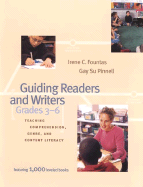
Guiding Readers and Writers by Fountas and Pinnell has a ton of information about implementing the reading and writing workshop. The book includes mini-lessons to help guide beginners in launching the workshop, along with images of anchor charts that I have found very helpful.


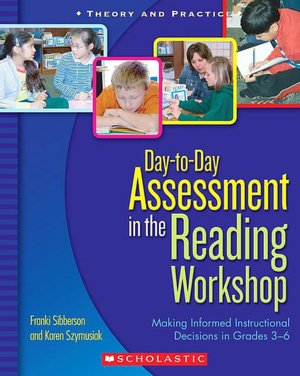
Day-to-Day Assessment in the Reading Workshop by Franki Sibberson helped ease many of my fears when deciding to venture into the world of reading and writing workshop. Franki explains how to use student work, class discussions, and conferences to drive instruction. Reading this book helped me see all the different methods I could use to assess my students and gather data. There are student work samples and forms to help get you started, too!


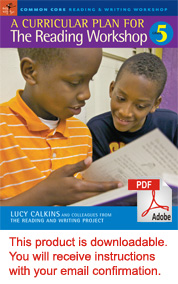
I also downloaded a digital book by Lucy Calkins called A Curricular Plan for the Reading Workshop from the Heinemann website. This is a great tool to help provide a scope and sequence for the year. One of the most intimidating factors for making the switch to reading workshop was not knowing what units to teach and how to teach them. Let's face it, that's what makes anthologies so convenient. They tell you what stories to teach, and what skills to teach with them. This book Gives you a month by month sequence you can use to plan instruction. Calkins also provides teaching points to cover within each unit of study. There are not any actual "lesson plans," but I like that. It is up to me to figure out what is best for my students, but I like having a resource that will help provide some structure. Heinemann also has the same type of resource for writing workshop, and both resources can be found for any grade level. 

Well, that's all for now. I am still fine tuning and researching. This is going to be quite a big year for me, but I am feeling very excited and energized about this new adventure. I can't wait to see my students grow and thrive in an environment that is catered to each of their individual needs. 

Who else is using this structure for teaching language arts? What are some of your favorite resources that you use? I can't wait to hear from you all!


Saturday, August 18, 2012

2012-2013, Here We Come!

I am heading back to school this Monday for the teachers' week back. As I stated in my last post, I have not and do not plan on purchasing a lot of new materials for my room this year. I am going to make a few things (one of which includes a neat Boggle bulletin board) and change up my set up a bit, but other than that not much room decorating going on this year...at leas that's the plan for now! My real focus during the next week is going to be planning the first week back and making some changes to the way my classroom will be run.

I am tired of giving my students a bunch of busy work on the first day/during the first week. I know this time should be spent teaching routines and such, but I know there has to be a more enjoyable and productive way. I want to hook them in the first week! I have a found a few ideas, but I am looking for more and I am sure that other teachers out there are, too! So...let's share! 

Here are some things I found that I may want to try during the first week:

This site is GREAT! There are tons of activities that you can use to help build team spirit in your classroom. What better way to start off the year than to challenge kids to work together and get to know one another in a positive way. I really like the idea of our classroom becoming a family, and I think activities like these are the ticket! 

2. R-E-S-P-E-C-T
Last year, our school implemented a school-wide "respect project." I would not describe our school as one with a great deal of behavior challenges, but there is always room for improvement, right? We felt that by encouraging our kids to be more respectful, we were setting them up for life-long success. I think talking about respect and creating an anchor chart like this one will help set the tone for the year. Some of the ideas we covered as a school last year came from The Essential 55 by Ron Clark. These are basically behaviors that should be expected of all students. We did not do all 55, but selected 10 that we felt were the most important. I found a shortened version of these expectations here

3. Find out THEIR expectations
I like the ideas I found on Mrs. Robinson's Classroom Blog, specifically her activity that asked students to think about their ides to help their classroom run smoothly. I love the charts she created with her students in this team activity. 

That's all I have so far. Please let us all know what you are doing for the first week back by linking your blog below, or just leave a comment! The more ideas the better! 

Wednesday, June 20, 2012

Brain Breaks

Brain breaks will help kids recharge and refocus!
I was chatting with a good friend (and colleague) of mine about the things we want to try next year. One idea of hers was to periodically give her students a "brain break" throughout class time when she sees they are dragging, or if they have been working diligently for extended periods of time and just need a quick breather. I think this is a great idea for all children, but I also know it will greatly benefit those with attention disorders such as ADD or ADHD. Not only will it let them get rid of some of their energy that they struggle with during lessons and work time, but it will also give their brains a mini-vacation from school (which we all know they desperately need from time to time).

It might also be a good tool for classroom management. If one were to come up with enough break ideas, they could be written down and placed in a jar. Perhaps a student who stands out as doing an excellent job could pick the next break from the jar and lead it. Or, perhaps they could just name a favorite. With the idea of taking several a day, it's a great way to recognize more than one student as well as provide them with something that isn't gimmicky (like candy, prize box items, etc.). ]

Here are some break  ideas we talked about so far:

  • Yoga- do a quick pose or two to help students refocus
  • 1 or 2 minute dance party- throw on some kid friendly music and jam
  • Silent ball- spend a few minutes playing a quick game where students sit on desks and pass a foam ball around the room. As the name suggests, students don't talk during this game or they are out. 
  • Doodle- Kids love to draw, so let them! Give them 5 minutes to whip out some paper and doodle like crazy. 
  • Simon Says- Play simon says and practice those listening skills! Even though they won't admit it, I am pretty sure the older ones will enjoy this.
  • Play a game on the white board- not sure what games could incorporate the entire class, but I am sure we'll come up with a few.

That's all we thought of so far. It's a good start, but I would like a lot of ideas to choose from to keep it interesting. 

Please share any ideas you have, and I will compile them into a list and share it with you at the end of the summer for you to try in your classrooms. If you know anyone who is a creative thinker, or already uses this strategy in their room, please pass along a link to this post...I would love to hear form as many people as possible!


Sunday, June 3, 2012

To Fail, Or Not to Fail...


Ever since my first year as a teacher, I have been assigning students grades for their class work, homework, tests and quizzes. It is logical to do so, right? After all, I received grades for my work growing up. However, as I do more and more professional reading and networking, my views on the traditional grading system are beginning to shift. This is not a small shift, but an epic, monumental, cosmic shift. One in which I feel like beating my head against a wall and exclaiming "What have I been doing to these poor children for all of these years?!?!?!?"

If you follow some of the same people as I do on Twitter, or have joined many educational blogs, you may have had the same seed planted in your own brain. The two questions that are battling it out in my brain are these: Are the grades I assign truly providing feedback and inspiring students to learn, grow,  and improve? OR Am I simply punishing them?

These are difficult questions to not only think about, but to try and find answers to. Many teachers that I have spoken with have a very hard time understanding why I am questioning this system. Not only that, but something I often hear is: "But if you don't give grades, how will parents know what their children are struggling with?" What I wonder is this: Do the grades we give really provide parents with accurate information about their child's learning?  Not only that, but am I alone in feeling like my time would be better spent giving written or verbal feedback about content of work instead of busying myself with trying to assign a numerical value to it? Not to mention the hours spent entering grades!

I am not saying this system is "wrong." I am just wondering if it is what is "best" for our children. I dread passing back papers, handing out progress reports and report cards. The look on the faces of some of my students is devastating. If I feel this way, how do THEY feel? 

I don't have the answers when it comes to solving this "problem." However, I do have the desire to think more about it find out as much as I can from others. I encourage you to do the same. If you haven't thought about the way you grade before now, just spend some time reflecting. I am not criticizing anyone. In fact, as my principal often says, "teaching is one of the hardest jobs...to do well." But in order to make sure we are doing the best we can for our students, I think this topic deserves some attention and careful consideration.

Resources I have found helpful:
The Case Against the Zero

Tuesday, May 29, 2012

Guest Blog Post from David Etkin

I am SUPER excited about today's post. My new Twitter buddy, David Etkin (@davidaetkin), generously agreed to share a post about Reading Partnerships and Clubs once I hit 100 followers.

This is a fantastic idea for making reading in the classroom feel more authentic, as well as making it much more motivating for students than your traditional whole-class novel set up. Thank you, David, for sharing this WONDERful idea and inspiring me to break out of the box and try new things in my own classroom. This is definitely something I will be implementing in the 2012-2013 school year!


The Case for Reading Partnerships and Clubs

Forming reading partnerships and book clubs with young students is challenging. How do I partner the students—By interest? Reading level? Friend requests? And once they are in these groups, how do I help them to set reasonable goals? How can I keep their conversations moving forward? What do I do about the student who doesn’t do his reading?

Surely, there are many questions. But I’m persevering in my book clubs plan because this I believe: Some of the most powerful reading we do is partner reading.


(These pictures are the students reading on the first day after they choose their books. After this first day, reading and preparation is done independently.)


I read for myself all the time. Oftentimes my reading is to find that next great book I can recommend to a student at just the right time. (And with the Nerdy Book Club, there are so many options.) But the books that are most memorable to me are the books I’ve had the opportunity to discuss.

My colleague, Brent Peterson, and I read Dead End in Norvelt in partnership. We kept a simple goal of about 100 pages a week (we were doing other reading, of course) and got together during a free period to discuss. These were awesome discussions.  [You can follow these links to see our conversations… if you’re really interested. Talk 1. Talk 2. Talk 3.] We came prepared with some Post-it notes and lists of things we wanted to talk about and off we went. The half hour was barely enough time. It was great how we each brought different ideas and insights to the conversation. Brent saw things that I never would have on my own. Discussing a book brought it to life and made it more interesting than it would have been had either of us read it independently.

Norvelt conversation #3


(Who else would have laughed with me about paraffin wax hands and deterring deer with bodily functions?)  I think these conversations are why, though the public response to Norvelt has been lukewarm, Brent and I liked it so much. You can get more of a summary of our conversation on our Nerdy Book Club Blog post.

Brent and I also read and discussed Wonder a lot. And then we started passing it along to others to read. My mom read it. Then my dad. Then my sister. Then her book club. Then other reading teachers at my school. Students and their parents. And we read it aloud to our students. (And finally my wife is reading it.) And it was like Wonder became part of the social fabric of my life. It was something I could talk about with anyone around me. Family dinners were filled with conversation of Auggie and Daisy and Via. Being able to then talk with the Maker of these characters and this WONDERworld was awesome.


And this---THIS---is why I want to persist in pushing my students into partnerships and clubs. As I’ve told them, book clubs are social opportunities wrapped around a book. (Hmmm… good pearl analogy there.) I want my students to experience the joy of a book coming to life. Of understanding a book better together because they talked about and cleared up confusions and saw things from different points of view. I want my students to know the richness of literature.


So I’m willing to spend an afternoon with the book partnership/club letters they’ve written to me (Name; why I would be a good partner to someone else; my approximate reading level [GRL]; five classmates who would be good partners for me and why) spread out all over the living room floor or dining room table. (“Dad, what are you doing?”)

I’m willing to deal with a slacker reader/partner who doesn’t come prepared with the reading complete or Post-it notes ready to discuss. Because I see so many other students benefiting from rich conversations and thought building that they wouldn’t have if they only read independently.

I’m looking forward to next year and getting these partnerships and clubs underway earlier in the year. We are already discussing how to scaffold them—giving students smaller texts with which to practice before diving into a novel. I can’t wait to see my students blossom in their book discussions.

We have a great year of book conversations behind us, a better one ahead—and the state of Book Clubs is Strong.

Your turn:

Have you experienced reading as part of a partnership or club? How did it add to your reading experience?


{resources}
Planning bookmark for clubs:


  Evaluation form:


Thanks again to David for his great post. Maybe if we leave him lots of comments, he'll do it again for my blogiversary! *crosses fingers* Be sure to check out David's blog, Words Read & Words Written,  for more great posts like this one!

Saturday, May 12, 2012

Happy Bloggy Birthday, Jen and Kellee!


I am so excited to be a part of Jen and Kellee's blog birthday celebration! Teach Mentor Texts is a great blog for sharing books for both personal enjoyment and classroom use. I got to know both Jen and Kellee through Twitter (and if you don't already follow them, you should!). We have had lots of great "chats" about great books and reading/writing workshop. So, when I was invited to help them celebrate their blog's second birthday, I readily accepted the invitation!


My book choice is actually a newer book that I have found a lot of uses for this year. That book is (my new favorite!) The One and Only Ivan by Katherine Applegate. If you have been on Twitter since the book was released, you know if has been getting a lot of love from teachers and students across the country. I used it as a read aloud in my class, but also to teach various skills in both reading and writing. 


First of all, this book totally hooked my kids. They loved the idea that it would be a quick read (there is a great deal of white space on the pages since it is a novel written verse). Also, the main characters are animals, which meant that almost every child could connect to the book. Finally, the language Katherine Applegate uses to tell Ivan's story is simply beautiful. She creates pictures with her words that are so vivid and detailed. That being said, it was a great book to revisit the important strategy of visualizing. My students were allowed to doodle what they pictured in their minds as they read. One student then took it a step further and added colors to her picture of Ivan's "domain. 

We also spent a lot of time talking about figurative language like similes and metaphors. This was a great way to discuss how interpret such language (we paraphrased the author's meaning into our own words), as well as how to use it in our own writing (we referred back to Ivan as we worked on poems in our poetry unit). 

Another great use for this book is discussing static and dynamic characters as there are examples of both in the story. This lead us to also discuss types on conflict (man vs. man, man vs. self, man vs. nature, etc.). Further more, we spent time identifying how the author shifted from the present to the past and the importance of using the past to help explain the story. Lots of great opportunities for digging deeper into story structure (beyond your basic characters, stetting, plot, blah blah blah...)

We also spent some time talking about author's viewpoint (or opinion). It is not difficult to figure out how Katherine Applegate feels about animals held in captivity, or how she feels about humans who mistreat animals. She uses her characters words and actions to make that clear. The students did such a great job pinpointing character words, actions, and story events that were examples of the author expressing her feelings without directly stating them to the reader. A lot of them began emulating this in their own opinion pieces about whether or not bubblegum should be allowed in school. 

What I found most fascinating was how the students were able to write about the story and recall information without even having the text directly in front of them. This was a great way for the students to practice summarizing and paraphrasing without them even knowing it! It also helped improve their listening comprehension.  There were just TONS of different mini lessons that were easily tied into this wonderful story. 


There are not words to describe how much I enjoyed Ivan, but I loved it even more after sharing it with my students and seeing them gain so much from it. We had rich discussions about human nature, society, animal rights, and character traits. I know this is a story that will stay with my students as they often refer back to it. In response journals about independent reading, I often come across sentences such as "This reminds of when ____ happened in The One and Only Ivan", or "I think ______ is a lot like Stella because..." It is fantastic to see the students hold on to a book and carry it with them long after our work with it is done. 


If you have not already shared this wonderful book with your students, I hope you decide to. I am more than happy to add some ideas for more uses in both reading and writing as I am STILL thinking of some that I would like to add in next year.

Sunday, March 18, 2012

Update and Pinterest Finds

Hello bloggy world! My grad class just got a whole lot more involved, so... much of my free time has been devoted to that. I will still post as often as I can, but it may only be about once a week. I've been doing a lot of reading in addition to a LOT of school work, so stay tuned for a post about that tomorrow.


I want to say a big thank you to all of my new followers! I am so excited to be inching close to 100, and flattered that you all think enough of my blog to join!


In the meantime, I thought I would share some fun things I found on Pinterest that you all might enjoy!


Already use these but lost the website. Thanks, Pinterest!
 This site has writing prompts grouped by month. There is one for each day of each month, so you never run out! I already use these in my room and I like them a lot. I give the kids a choice of using the prompt or writing a free-write. 


This is a great homework idea from the author of "Conferring: The Keystone to Reader's Workshop." I am going to suggest this to my reading/writing counterparts next year. 

Students can't interrupt reading groups when the light is on! Great visual reminder! 
This is a great management idea from the Lesson Plan Diva. Use this touch light when you are working with small groups or having reading/writing conferences to let students know you don't want to be disturbed. Definitely implementing this ASAP!

Reader's Notebooks 
A great (and more organized ) to keep a reader's notebook (or in my case, a response journal) from Word from the Corner's blog. Next year, we are going to set these up at the very beginning. I may tweak it a bit, adding my own creations to them. 

And finally....
Fluency Study 
This is a fluency study that Life in 4B did with her fourth graders. I love the idea of teaching fluency this way to intermediate students. It's not just about reading fast! I proposed the idea of doing the "Interpretive Reading Contest" at our school, with the winner for the whole school reading aloud on our morning announcement for World Read Aloud Day next year. I can't wait!

There you have it! I hope you like these ideas as much as I do! Enjoy the rest of your weekend!


Sunday, February 26, 2012

Week in Review 2/24/11

Although we had a short week, I sure felt like it was full! We got a lot done in my classes. We continued working with Phoebe the Spy and discussed setting and how it affects the actions of the characters. We are also continuing to work diligently on the bubble gum opinion/persuasive writing piece. The kids are learning a LOT about gum and I can't wait to share some of their writing with you all! 


I also think I have perfected my reading response journal system (finally!). It was after a lot of discussion with colleagues, my principal, and Twitter pals that I finally came up with a process that works for my students and me. Here's the run down:

I collect journals from each class every other week on an alternating schedule (e.g. My morning class hand them in one week, and my afternoon class hands them in the following week). This means that the students have two full weeks to work on them here and there during their independent reading time. I place one of those circular colored dot stickers on each child's notebook. They turn them in on Tuesdays, Wednesdays, Thursdays, or Fridays depending on their color. Before, I used to have both classes hand them in every week. This meant I was taking home up to ten journals a night! It was too much since I write back to each student. This new schedule is MUCH better and I do not fall behind in responding as I did before.


I also changed the way the journals are graded. I am more concerned with the students developing their reading and writing skills, so I made these areas have more of an impact. I also upped the ante since this is like a long term project and made the journals worth more points. This was actually my principal's idea. We are really owrking towards older students being held responsible for what they have learned in writing. I added a "C.U.P.S." section that will be put into their writing grade.


Another thing that is really helping is setting aside the last 5-10 minutes of independent reading solely for journaling. This way, my procrastinators must work at least a little each day instead of waiting to do it all on the day the journal is due. In addition, I gave the students a schedule so they knew the exact date their response was due, so no more excuses!


Here is the information I reviewed and gave out to students:

Reading Response Journal Rubric and Expectations

Reading Response Journals Calendar April

I use the cards below when grading journal responses. I simply cut them out, write on them, and tape them into journals. This has helped the students understand what areas they need to improve upon.
Journal Score Cards-1
The students who still continued to wait until the last minute, or did not do what I thought they were capable of, had a conference with me about their journal. I explained why they received the grade they did. Hopefully I will see more improvement from them. 

 This week, I also gave myself permission to abandon a read aloud with the kiddos in order to read another one. Actually, I gave them the choice. Lesson learned: always give your kids options when it comes to a read aloud. Do not just choose one for them. Of course you cannot always please everyone, but aim for the majority. I hate to admit it, but we had been working on the same book since November. We were not even halfway through. The reason? Well, I think it was because the kids just didn't LOVE the book I chose for them. I loved it, but who cares if I love it? So, I gave them a choice: keep going with the current read aloud or take a break for another book. Before they were allowed to choose, I played the book trailer (a tool I have found VERY useful), read the inside flap, and read a few pages from the beginning. It was almost unanimous! Now we are reading (and clearly LOVING) The One and Only Ivan.

Finally, I also found out that I received 100% on all of my grad class assignments this week. I am looking forward to sharing this news with my students. I will make sure to explain that it wasn't easy, but I took my time, worked hard, and made sure I understood all of the material. Hopefully they will be inspired by my own learning experiences. Only time will tell!

Wednesday, February 8, 2012

An Exciting Opportunity!

I got some great news a few weeks ago. I can hardly contain myself! I just hope the kiddos find it as fascinating as I do!


Are you ready?????????


Our school is planning to host a Webinar with child author (and prodigy) Adora Svitak!!!


Ok, ok, ok...some of you may be thinking what I was at first: "Who?"


I am not too proud to admit that I wasn't sure who she was at first. However, I immediately began to research and was blown away. Adora Svitak began writing when she was very young, and published her first book at the age of seven! She also began reading chapter books at age three! She has written books meant to inspire other young writers which are full of her own short stories, poems, and writing tips. In addition to her writing, Adora also spends time teaching children about writing. She accomplishes this through school visits and webinars...which is what we will be doing!


Check out the video above of Adora talking about her reading and writing life (I love how well spoken she is!)


The Webinars will take place over the course several weeks. All fourth and fifth grade students will participate. There will be four one-hour sessions. Each homeroom will have the opportunity to Skype with Adora while the other students participate via livestreaming chat. The homerooms will rotate turns talking to Adora using Skype. Each week, Adora will be presenting the steps to write a short story. The students will be given an assignment to work on each week so that they are prepared for the next week's lesson.


I am very curious to observe how the students react to someone so close to their age who has accomplished so much. I truly hope it will be a motivating and inspiring experience. I am also interested to see how they perform on assignments given to them by a peer rather than a traditional adult teacher. Something tells me they might pull out all the stops to impress Adora!


Tuesday, January 31, 2012

It's Monday, What are YOU Reading? 1/31/12

Hello faithful followers :)


I am proud to say I read not one, but TWO books this week! A big improvement from last week. Although, I am still hanging my head in shame a bit since I am not actually posting on a Monday. *sigh*


If you fee like lending your eyes for a moment, I can explain (if you don't want to hear my excuses, just keep scrolling). You see, I am one of two teachers heading up Student Council. I am realizing that this is a HUGE undertaking since I work with about 20 students third, fourth, and fifth grade. We are scheduled to publish our first ever school newspaper, and it has been hectic! So, my reading life is not what it should be. However, I am looking forward to posting about out paper and even publishing a copy for you all to check out, so stay tuned...


This week I finally finished Neil Gaiman's The Graveyard Book. It was very good. I enjoyed the creepy twists and turns, most of which were unexpected since it is a Newbery Award winning book. I tend to associate the Newbery with strictly realistic fiction, but in my "Nerdbery Challenge" journey, I am discovering that there is a whole lot more to Newbery than I had previously thought. This would be a great book for some of my staunch "horror" fans to begin moving towards some other books. If they like this, then maybe they will like other Newbery winners in other genres? 


The other book I read was Grandpa Green by Lane Smith. This is a lovely picture book filled with images of lush green topiaries that tell the story of one man's life. This book gave my insides a little nostalgic punch. Not because I am a green thumb, but because the man whose life is being told through the sculptured flora makes me think of my own grandparents whom I miss on a daily basis. It is a simple story, but a sweet one. 


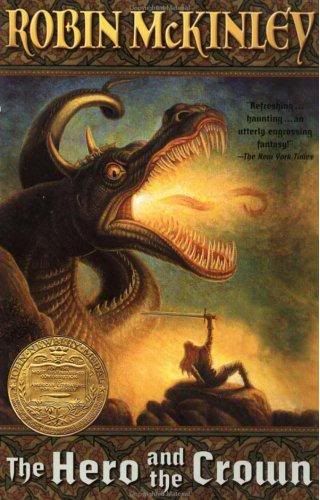
PhotobucketThis week I am going to work on The Hero and the Crown by Robin McKinley. This is another Newbery winning fantasy...see a trend happening? 


That's is for now, friends. So tell me...what are YOU reading?  


Friday, January 27, 2012

What a WONDERful site!

Maybe some of you are already familiar with this site, if not...get familiar!


Thanks to my ever flowing fountain of knowledge and resources that is Twitter, I happened upon this site when I began following Barbara Phillips (@wonderphillips). The site is Wonderopolis, a project developed by the National Center for Family Literacy (NCFL) to encourage families to embark on reading and learning adventures together. Barbara is a Lead Ambassador for Wonderyear 2012.


Here's how it works:
Screen Shot
Each day, a new "wonder" is posted. The wonder is in the form of a question that most kids may have puzzled over at one time or another. At this point, there are over 400 wonders to peruse through! Each one includes a short video related to the wonder of the day, a bit or informational text, links, and vocabulary.


My brain immediately began cranking out ways to incorporate this new (and FREE) resource into my teaching. I wanted to spend some time with my students working on the skill of determining importance, as this is often difficult and many of them struggle to sort important facts from interesting ones. Of course this is not easy, as sometimes they are both one and the same! A light bulb went off and I knew that Wonderopolis would help. 


I taught my students how to use a Fact, Question, Response (FQR) organizer to track their learning (find one here from BetterLesson.com). This is a great tool because it helps them sort their connections, thoughts, "wow" moments, and questions from the actual facts that they need to take away from the text. It also helps them to see how much thinking goes on as they are learning from a text.


Searching for "wonders" of their own
Once I had modeled with a short article, I introduced them to Wonderopolis. Wonder is an understatement when it comes to how enthralled they became with the concept. I gave them free reign to choose any "wonder" that they found interesting. Once they found one that struck their fancy, they worked on their own FQR organizers. I explained that when we met again, I wanted them to share some of what they had learned. They were so engaged! You could have heard a pin drop as they began clicking away, and this was without access to the videos! (Unfortunately, our county blocks the content of embedded videos, but I can access it with my teacher account for whole group if need be.)


After finding a "wonder" to learn about, I began hearing some chatter. Normally I would hush them back down to help them focus, but when I heard the content of the chatter, I stepped back and let them run with it. I heard a lot of "Hey! Did you know..." and "Wow! Look at this!" followed by "That is so cool, I am going to read that one next!" No, your eyes are not deceiving you, they wanted to read more and were very disappointed when our time was up. I promised to email a link home and encouraged them to share their learning with their families.


Adding information to FQR charts
Their work was impressive. Had I chosen an article for them, I doubt it would have yielded the same results. I am glad I gave them the freedom to explore and be guided by their own curiosity. In education, it is becoming an increasingly rare thing to allow the students so much freedom to explore their own interests. Wonderopolis gives that power back to children. This will definitely become a staple in my "bag of tricks."


Thursday, January 26, 2012

Winter/ New Year's Poems and Activities!


Today is my birthday! (I am not telling you how old I am, but I will say that I am getting uncomfortably close to a dreaded decade!) Since I can't share any cake with you, I thought I would celebrate by sharing a "freebie" with all of you instead.

Our school has decided to change our "Poem of the Week" event to "Poem of the Month." As always, our reading specialist has found some wonderful poems and created writing activities to accompany them. Enjoy!

New Year's Poems:

Snow Poems:
Intermediate Response

Thursday, January 19, 2012

New Toy!

I am so excited to share the new "toy" I have in my classroom! I got it for Christmas and am already obsessed with it. It's called IntelliScanner, and it is going to change my classroom library!


Books that are "lent" out appear with  yellow
 dots indicating that are not available. 
Because I want my students to read as much as possible, I obviously need to give them constant access to books. Unfortunately, not all of my students have a plethora to choose from at home, so I allow my precious, treasured, books to go home with them. A lot of time and money has gone into putting together my ever-growing classroom library, so I have students act as my "Librarians" to check books in and out for their classmates. This used to be done with cards I created, but I am currently in the process of transitioning my system from the pencil paper world into the digital one. Enter the IntelliScanner. 


Once books are scanned, a lot of useful
 information about them is added.
This handy little device scans and catalogs pretty much anything with a barcode. Once you scan the barcode, it will conduct a search and find information about that item. For books, it will pull up the title, cover illustration, author, publisher, price, and often a summary of the book. In addition, you can check books out to "friends" by entering in who has position of the book. You can conduct searches using keywords from the titles, too! 

I am currently in the process of scanning my books into the library. I will admit that some of my older books do not scan in correctly and I have to input the ISBN number by hand. However, the software that allows for the managing of my library is well worth the money I spent on my scanner (around $80 for the "Classic" IntelliScanner), even if the scanner itself doesn’t always get the job done. In two days I was able to input over 200 books, so in my opinion it is a pretty quick process. Once all books are scanned, I will teach my “Librarians” how to search for and check in/out books. I anticipate that this will make the process much faster and easier to track. 

Friday, November 4, 2011

CRs Got You Down?

I have got a solution for you! While I was grading the latest county mandated test (bleh!), I noticed that my darlings were really struggling with their constructed responses (CRs). Although they have been doing them since 3rd grade, I usually find that 5th graders need a few reminders when completing CRs in the beginning of the school year. However, my reminders did not seem to do the trick this time. You know, the usual "Don't forget to support your thinking with details from the text!" or "Make sure you connect your own thinking to your answer!"
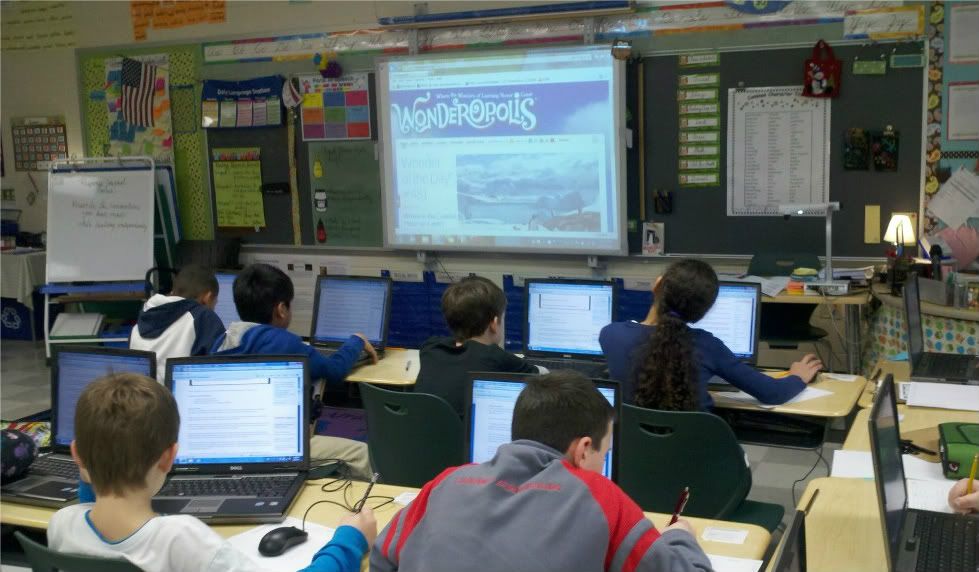

In an effort to help them improve their writing, I stumbled up this site. There are lots of resources for guiding your students through the tedious process of completing CRs. I really liked the revision tools that were tied into the 6+1 writing traits (2 birds, one stone!).


Although I shudder at the idea of giving students a formula, I do believe they need some guidelines to help scaffold them until they are more successful. I will not present these as "rules" for wtiting CRs, but rather suggestions for helping them improve. Hopefully, this and our "Shoot for Three" incentive will get their pencils moving and the wheels turning!


Do you have any lessons or tricks you use to help your students experience more success with CRs? Please share by commenting below!